
Macros Explained: How Much Protein, Carbs and Fat Should You Eat?
A clear guide to macronutrients: calories per gram of protein, carbs and fat, the recommended ranges, how to set your own macro targets and how to hit them.
"Counting macros" sounds technical, but the idea is simple. Calories tell you how much energy you eat; macros tell you where that energy comes from. Getting both roughly right is what makes a diet feel good and deliver results.
The three macronutrients
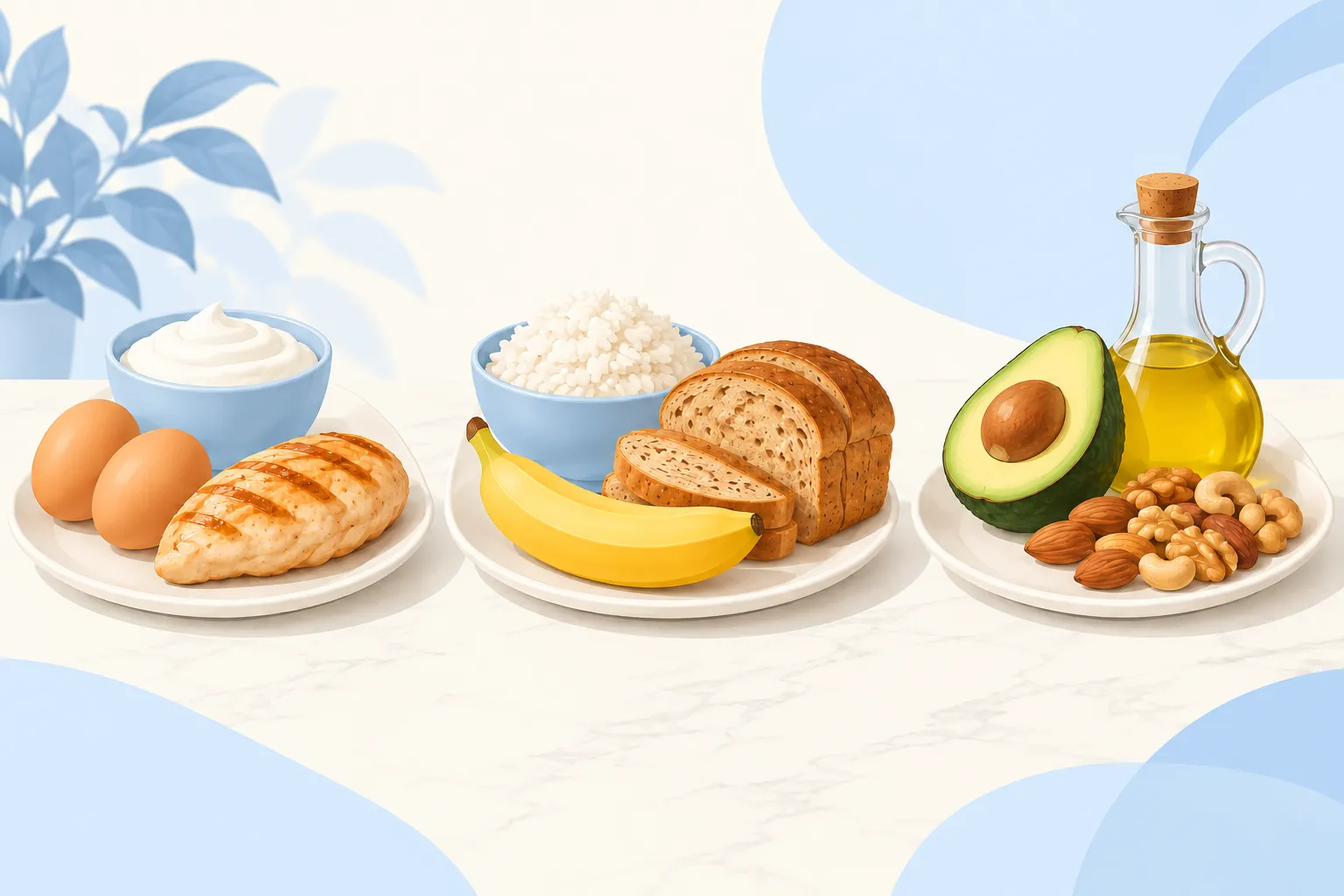
- Protein: 4 calories per gram. Builds and repairs muscle and other tissue, and is the most filling macro. Found in meat, fish, eggs, dairy, tofu, beans and lentils.
- Carbohydrates: 4 calories per gram. Your body's preferred fuel for high-intensity exercise and the brain. Found in grains, fruit, vegetables, legumes and sugars.
- Fat: 9 calories per gram. Needed for hormones and for absorbing vitamins A, D, E and K. Found in oils, nuts, seeds, avocado, dairy and meat.
Alcohol also provides energy, about 7 calories per gram, but no essential nutrients.
What the official ranges say
The U.S. National Academies set Acceptable Macronutrient Distribution Ranges (AMDRs) for adults:
- Carbohydrates: 45–65% of calories
- Fat: 20–35% of calories
- Protein: 10–35% of calories
The Recommended Dietary Allowance (RDA) for protein is 0.8 grams per kilogram of body weight per day. That's the minimum to meet basic needs for most adults, not the optimal amount for building muscle.
Protein for active people
The International Society of Sports Nutrition's position stand recommends 1.4–2.0 g of protein per kg of body weight per day for most exercising people. A 2018 meta-analysis of 49 studies found that gains in lean mass from resistance training leveled off at around 1.6 g/kg per day. We go deeper in How Much Protein Do You Need to Build Muscle?
How to set your macros in four steps
- Set your calories. Use our guide to working out your daily calories.
- Set protein first. 1.6 g/kg is a practical target for most active people (about 0.7 g per pound).
- Set fat. Around 25–30% of calories keeps you within the recommended range.
- Fill the rest with carbs. Whatever calories remain go to carbohydrates.
Worked example
An 80 kg (176 lb) person eating 2,400 calories a day:
- Protein: 80 × 1.6 = 128 g → 512 calories
- Fat: 2,400 × 0.27 ≈ 650 calories → 72 g
- Carbs: 2,400 − 512 − 650 = 1,238 calories → about 310 g
That works out to roughly 21% protein, 27% fat and 52% carbs, comfortably inside every official range.
Tips for hitting your macros
- Build each meal around protein. Spread it across three to five meals rather than one big serving.
- Watch fats in cooking. At 9 calories per gram, oil and butter add up quickly. A tablespoon of olive oil is about 120 calories.
- Choose fiber-rich carbs. Oats, potatoes, fruit, beans and whole grains are more filling than refined snacks.
- Aim for close, not perfect. Landing within about 10 grams of your protein target most days is a great result.
Do macros matter for weight loss?
For weight change, total calories matter most; see What Is a Calorie Deficit? But macros influence what you lose and how you feel. Higher protein helps preserve muscle and control hunger while dieting, which is why it's the one macro worth tracking closely.
Track macros in seconds
Cal Sync's AI scanner estimates calories and macros from a photo of your meal, and detailed analytics show your protein, carbs and fat over time. Share progress with friends to stay on track together.
This article is for general information and isn't medical advice. If you're pregnant, have a medical condition or a history of disordered eating, talk to a doctor or registered dietitian before changing how you eat.
Sources
- National Academies. Dietary Reference Intakes for Energy, Carbohydrate, Fiber, Fat, Fatty Acids, Cholesterol, Protein, and Amino Acids (2005)
- Jäger R, et al. International Society of Sports Nutrition Position Stand: protein and exercise. J Int Soc Sports Nutr. 2017
- Morton RW, et al. A systematic review, meta-analysis and meta-regression of the effect of protein supplementation on resistance training-induced gains in muscle mass and strength. Br J Sports Med. 2018
- USDA FoodData Central