
How Much Protein Do You Need to Build Muscle? What the Research Says
How much protein you need per day to build muscle, based on meta-analyses and the ISSN position stand, plus how to spread it across meals and easy ways to hit your target.
Protein is the nutrient everyone in the gym talks about, and for good reason. But how much do you actually need, and does more always mean more muscle? Research gives a clearer answer than most gym advice.
The quick answer
For most people who lift weights, about 1.6 grams of protein per kilogram of body weight per day (roughly 0.7 g per pound) is a well-supported target. Going up to about 2.2 g/kg is reasonable if you want to cover individual differences.
What the research shows
The 2018 meta-analysis
Morton and colleagues pooled 49 randomized controlled trials with 1,863 participants who did resistance training for at least six weeks. Protein supplementation increased gains in strength and lean mass, and the benefit for lean mass leveled off at total intakes of about 1.62 g/kg per day. The effect was smaller with increasing age and larger in people who already had training experience.
The ISSN position stand
The International Society of Sports Nutrition recommends 1.4–2.0 g/kg per day for most exercising individuals, and notes that higher intakes may help preserve lean mass during a calorie deficit.
The baseline
The RDA of 0.8 g/kg prevents deficiency in most adults, but it was not designed to maximize muscle growth in people who train.
How much is that for you?
- 60 kg (132 lb): about 95–130 g a day
- 75 kg (165 lb): about 120–165 g a day
- 90 kg (198 lb): about 145–200 g a day
If you carry a lot of body fat, basing the number on your goal weight gives a more practical target.
Does timing matter?
Total daily protein matters most. Spreading it across meals helps: the ISSN position stand suggests doses of about 0.25 g/kg (often 20–40 g) of high-quality protein every three to four hours. A practical approach is three or four meals that each contain a solid serving of protein, plus a snack if you need it.
Protein while cutting
When you're in a calorie deficit, protein becomes even more important for keeping muscle. A review of evidence for natural bodybuilders suggested higher intakes during contest preparation, along with a gradual rate of weight loss of 0.5–1% of body weight per week. Learn more in Bulking vs Cutting and What Is a Calorie Deficit?
Easy ways to hit your protein target
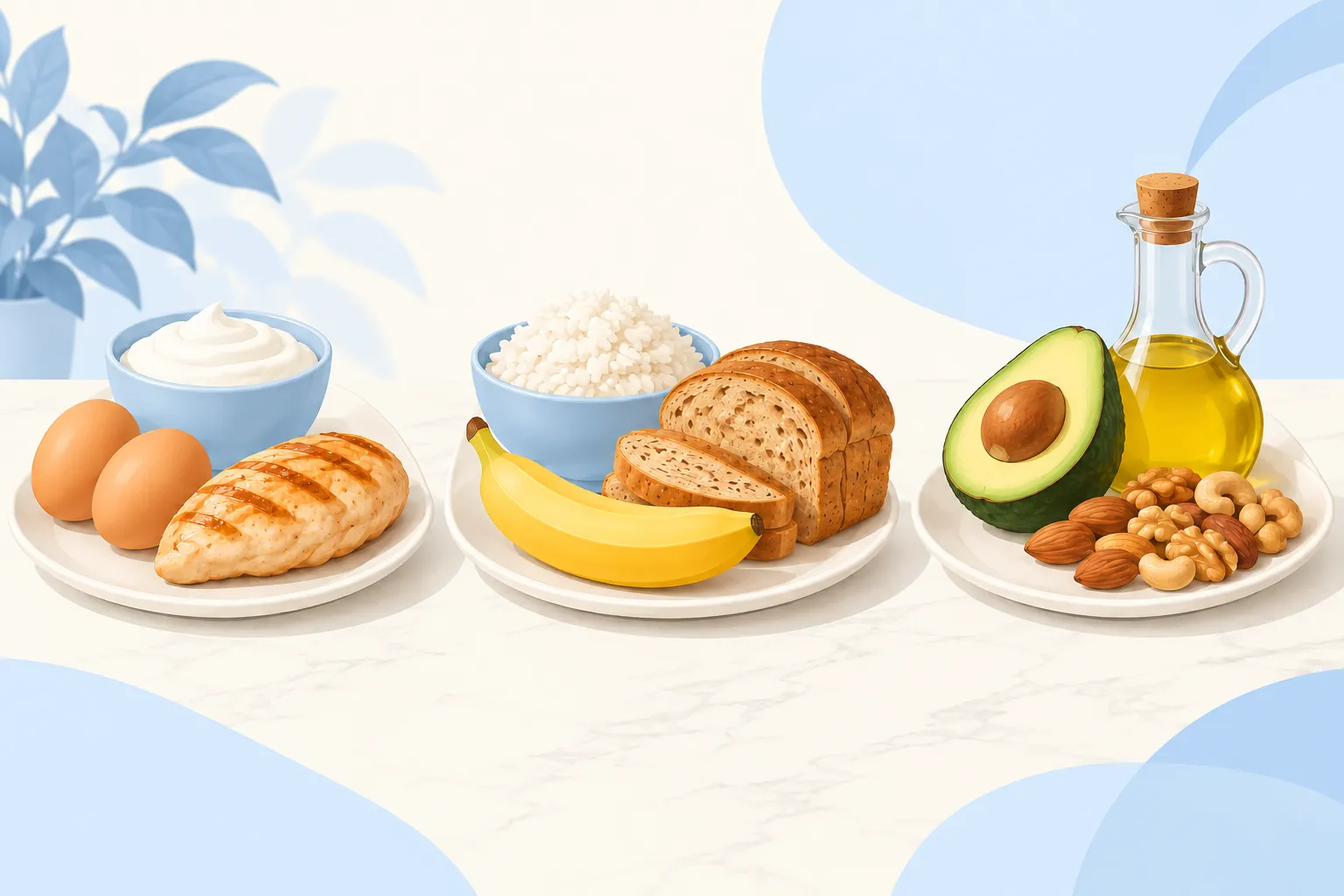
- Breakfast: Greek yogurt, eggs, cottage cheese or a protein smoothie
- Lunch and dinner: a palm-to-hand-sized portion of chicken, fish, lean beef, tofu or tempeh
- Snacks: jerky, edamame, milk, cheese or a protein bar
- Plant-based: combine legumes, soy, seitan and grains across the day
- Supplements: protein powder is just convenient food; it's useful, not required
Check approximate protein content with USDA FoodData Central or the nutrition label.
Is a high-protein diet safe?
The ISSN position stand concludes that protein intakes in the ranges above are safe for healthy, exercising people. If you have kidney disease or another medical condition, talk to your doctor before increasing protein.
Protein is only part of it
Muscle growth needs a training stimulus: lifting with progressive overload, enough total calories and sleep. Protein supports that process; it doesn't replace it. To see how protein fits with carbs and fat, read Macros Explained.
Track your protein with your crew
Cal Sync estimates protein, carbs, fat and calories from a photo of your meal, so tracking takes seconds. Create a group with your gym friends, set your goals and climb the leaderboard together.
This article is for general information and isn't medical advice. If you're pregnant, have a medical condition or a history of disordered eating, talk to a doctor or registered dietitian before changing how you eat.
Sources
- Morton RW, et al. Protein supplementation and resistance training-induced gains in muscle mass and strength: systematic review, meta-analysis and meta-regression. Br J Sports Med. 2018
- Jäger R, et al. International Society of Sports Nutrition Position Stand: protein and exercise. J Int Soc Sports Nutr. 2017
- Helms ER, Aragon AA, Fitschen PJ. Evidence-based recommendations for natural bodybuilding contest preparation. J Int Soc Sports Nutr. 2014
- USDA FoodData Central